

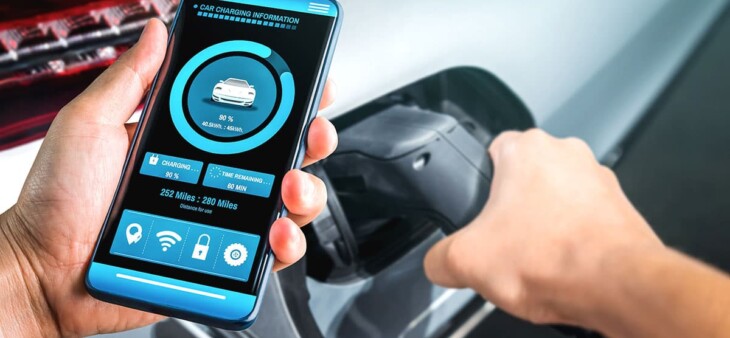
For an outdoor EV charger in Pacific Palisades, start with equipment rated for outdoor use, then plan the location around coastal exposure, direct sun, drainage, parking position, cable reach, Wi-Fi signal, and impact risk. A weather rating protects the enclosure under defined test conditions. It does not correct poor placement, standing water, an exposed cable path, or an electrical system without enough capacity.
A practical coastal setup pairs certified equipment with a site-specific installation. EVIQO lists an IP66 and NEMA 4 enclosure, a 25-foot charging cable, 2.4 GHz Wi-Fi app support, and UL/ETL, FCC, and ENERGY STAR certifications for its 40A plug-in and 48A hardwired Level 2 models. Review the final model, connector, circuit, and mounting plan with a licensed electrical contractor before purchase.
Outdoor EV Charger Features at a Glance
| Feature | What to Check | Why It Matters Near the Coast |
|---|---|---|
| Outdoor Enclosure Rating | IP and NEMA rating stated by the manufacturer | Defines protection against dust and water under specific tests |
| Safety Certification | Recognized listing or certification marks for the complete unit | Supports code review and product verification |
| Cable Reach | Enough length for the normal parking position without stretching | Reduces cable strain and poor placement choices |
| Cable Storage | Holster and cable management above wet or dirty surfaces | Limits trip hazards and connector exposure |
| Smart Controls | Reliable 2.4 GHz Wi-Fi at the charger location | Supports schedules, status checks, and energy tracking |
| Installation Type | Plug-in or hardwired setup matched to the site | Affects outdoor connection points, output, and service |
| Mounting Location | Shade, drainage, physical protection, and service access | Reduces unnecessary weather and impact exposure |
Start With a Real Outdoor Rating
The U.S. Department of Energy states that outdoor home charging remains safe, including in rain, when the installation uses outdoor-rated equipment. The rating belongs to the product enclosure and test standard. It does not mean every wall, pedestal, outlet, cable route, or parking area suits the equipment.
When homeowners search for a weatherproof EV charger, the enclosure rating provides the useful detail. IP66 indicates a dust-tight enclosure with protection against powerful water jets. NEMA Type 4 covers indoor or outdoor enclosures designed for rain, sleet, snow, windblown dust, splashing water, and hose-directed water. Neither label means the charger belongs in standing water or under constant roof runoff.
Coastal homes need one more distinction. NEMA Type 4 and Type 4X do not mean the same thing. Type 4X adds corrosion protection to the Type 4 requirements. If a charger carries Type 4 rather than Type 4X, do not treat the rating as a salt-air corrosion claim. Review the enclosure materials, mounting hardware, installation instructions, warranty terms, and maintenance guidance for the exact model.
The NEMA enclosure type guide lists the conditions addressed by each enclosure type. Use it to interpret the label, then follow the charger’s manual and the approved site plan.
Choose the Location Before the Charger
The best mounting point keeps daily charging simple while limiting avoidable exposure. Walk the parking area before selecting a wall or pedestal. Confirm where the charge port sits when the vehicle parks nose-in and backed-in. Check whether a second vehicle, gate, trash bin, garage door, or landscaping blocks the route.
Favor a location with natural shade or cover when the equipment instructions allow it. Keep the unit away from roof drainage, sprinklers, low spots, and areas where water collects. Protect it from vehicle impact and leave working space for inspection and service. A freestanding pedestal near a driveway often needs a different conduit path and physical protection than a wall-mounted charger beside a garage.
Long wire runs also affect project cost. The route from the electrical panel to the charger changes labor, conductor length, conduit, wall repairs, and voltage-drop planning. Review our guide to home EV charger installation cost in Pacific Palisades before comparing hardware prices alone.
Plan Cable Reach and Storage

Cable length controls where you park and where the charger mounts. A 25-foot cable gives more placement flexibility than a short cord, especially when the charge port sits on the opposite side of the vehicle or the driveway serves more than one parking position. Measure the real path from the mounted holster to the vehicle inlet. Do not measure a straight line through a parked car.
The cable should reach without tension, tight bends, or contact with sharp edges. It should not cross a public walkway or rest in soil, pooled water, or a vehicle path. A stable holster keeps the connector off the ground. Organized cable storage also reduces trip risk and helps protect the connector from dirt and impact.
Compare Hardwired and Plug-In Outdoor Setups
A hardwired charger connects directly to a dedicated circuit and removes the plug-and-receptacle connection. A plug-in charger adds flexibility for replacement or relocation, but the receptacle, cover, enclosure, and installation must suit the outdoor location and charger instructions. Local code, equipment listing, output, and site conditions decide the right method.
Higher-output residential units often use hardwired installation. EVIQO’s 40A model uses a NEMA 14-50 plug and supplies up to 9.6 kW. Its 48A model uses a hardwired connection and supplies up to 11.5 kW. Read our plug-in vs hardwired EV charger guide and the 40 amp vs 48 amp charger comparison before selecting the circuit and equipment.
Check Wi-Fi at the Final Mounting Point
Smart controls help with charging schedules, session status, energy tracking, and off-peak charging. They only help when the charger receives a stable signal. Exterior walls, distance from the router, garage construction, landscaping, and nearby equipment all affect Wi-Fi performance.
EVIQO states that its smart app functions require a 2.4 GHz Wi-Fi internet connection. Test the network at the proposed mounting point with the garage door and gate in their normal positions. If the signal drops, address coverage before installation or confirm how the charger operates without an active connection. Charging should remain practical even when an app or network needs attention.
Verify Safety Certifications and Documentation
Choose charging equipment with recognized safety certification for the complete unit, not only individual internal components. Match the product label, model number, connector, installation type, and electrical ratings to the documentation. Keep the installation manual available for the contractor and inspector.
The Department of Energy recommends safety-certified charging equipment and notes that ENERGY STAR certified models undergo testing by a nationally recognized testing laboratory. EVIQO lists UL/ETL, FCC, and ENERGY STAR certifications on its current 40A and 48A product pages. Confirm the marks on the exact unit received before installation.
Review the Panel Permit and Circuit
Outdoor readiness does not replace electrical planning. A licensed contractor should review the service rating, calculated load, panel condition, breaker space, conductor route, grounding, and manufacturer instructions. A 40A continuous charging load normally uses a dedicated 50A circuit. A 48A continuous load normally uses a dedicated 60A circuit. The final design remains subject to the equipment listing, adopted code, and local approval.
An open breaker position does not prove the home has enough capacity. If the service needs work, review Luxus Construction’s main electrical box and panel upgrade service. Also review Pacific Palisades EV charger permit requirements before scheduling the installation.
EVIQO Features for Outdoor Home Charging
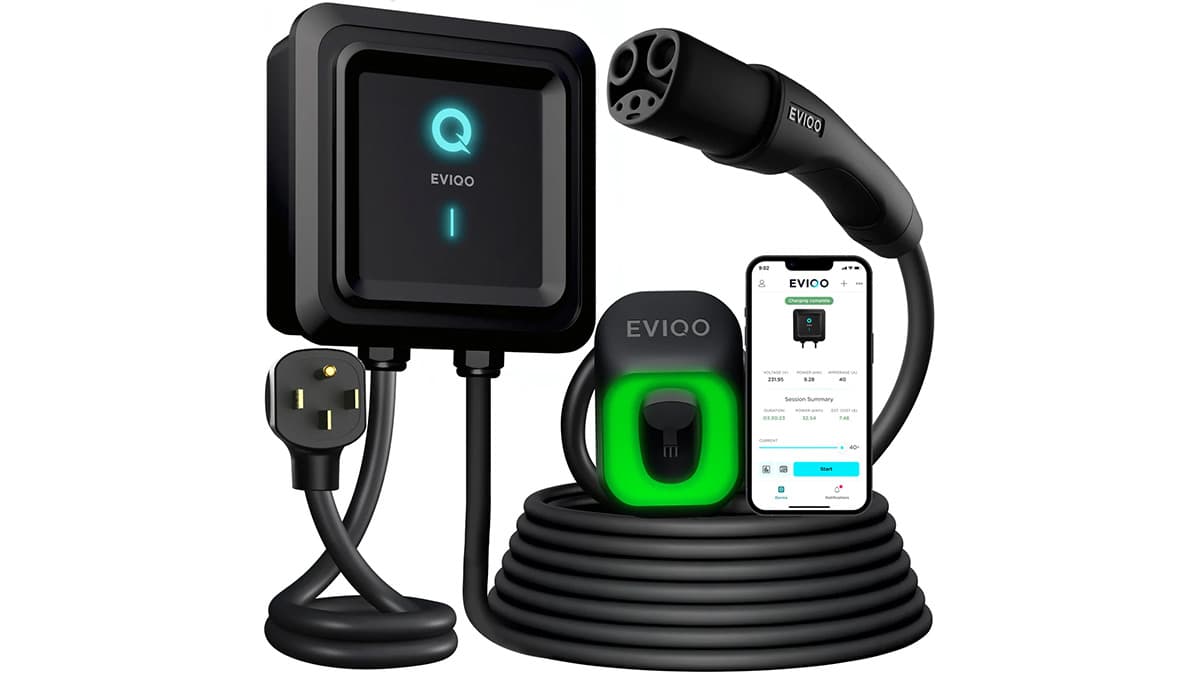
EVIQO offers the same core outdoor and smart features across the two models relevant to this article. The choice between them centers on installation type, electrical capacity, vehicle input, and charging schedule.
- EVIQO 40A plug-in Level 2 EV charger: 9.6 kW output, NEMA 14-50 plug, IP66 and NEMA 4 enclosure, 25-foot cable, 2.4 GHz Wi-Fi app support, J1772 connector, and a three-year warranty.
- EVIQO 48A hardwired Level 2 EV charger: 11.5 kW output, hardwired connection, IP66 and NEMA 4 enclosure, 25-foot cable, 2.4 GHz Wi-Fi app support, J1772 connector, and a three-year warranty.
The manufacturer lists UL/ETL, FCC, and ENERGY STAR certifications for both models. Product specifications, connector options, availability, pricing, and warranty terms change. Verify the current product page and the label on the delivered unit.
Compare models: See EVIQO charger options and current pricing
Outdoor Charger Installation Checklist
- Confirm the charger carries an outdoor enclosure rating for the intended location.
- Verify safety certification, model number, connector, output, and installation method.
- Check the vehicle’s charge-port position for every normal parking arrangement.
- Measure the cable route and provide a holster that keeps the connector off the ground.
- Avoid roof runoff, sprinklers, standing water, vehicle impact, and blocked service access.
- Test 2.4 GHz Wi-Fi at the exact mounting point if app features matter.
- Request a load calculation and review the panel, circuit, grounding, and conductor route.
- Confirm permit and inspection requirements before work starts.
- Follow the maintenance and inspection instructions for the charger and outdoor electrical components.
Schedule an Outdoor EV Charger Consultation
A good outdoor charging plan starts with the parking area, electrical system, and exposure conditions. Luxus Construction provides residential electrical services in Pacific Palisades as a licensed C10 electrical contractor. Review the Level 2 EV charger installation guide for the full planning process.
Schedule an outdoor EV charger installation consultation with Luxus Construction. Request a site assessment before ordering equipment or finalizing the charger location.