

Choose the EVIQO 40A plug-in charger if a suitable 50A circuit and overnight charging meet your needs. Choose the 48A hardwired option if your vehicle accepts the higher AC output, your home supports a 60A charging circuit, and shorter charging sessions matter to you. At 240V, the difference is 9.6 kW versus approximately 11.5 kW.
This EVIQO 40A vs 48A EV charger comparison focuses on the current Gen 2 plug-in and hardwired options. Compare your vehicle’s charging limit, installation scope, and daily energy needs before choosing a model.
EVIQO 40A vs 48A at a glance
| Decision factor | EVIQO 40A plug-in | EVIQO 48A hardwired |
|---|---|---|
| Charging output compared | 40A | 48A |
| Power at 240V | 9.6 kW | 11.52 kW |
| Electrical connection | NEMA 14-50 receptacle | Direct wiring |
| Circuit for this output | Dedicated 50A circuit | Dedicated 60A circuit |
| Charging cable | 25 ft | 25 ft |
| Relocation | Unplug and remount at a suitable site | Electrician disconnects and reinstalls |
| Main buying reason | Plug-in flexibility | More output and a fixed installation |
EVIQO also advertises a 50A setting on selected hardwired versions, with a 70A circuit requirement. This guide compares charging at 40A and 48A. Match your order and electrical design to the exact model’s current instructions.
See the EVIQO 40A plug-in charger or compare the EVIQO 48A hardwired charger. Review current pricing and the selected connector before ordering.
How much faster is the 48A EVIQO charger
At the same 240V supply, 48A provides 20 percent more charging power than 40A. For the same energy transfer at constant full output, the theoretical charging time falls by about 17 percent.
For a 40 kWh energy transfer, the calculation gives:
- 40A at 9.6 kW: approximately 4 hours 10 minutes.
- 48A at 11.52 kW: approximately 3 hours 28 minutes.
This illustration excludes charging losses and assumes the vehicle accepts the full output throughout the session. Battery temperature, charging settings, and the vehicle’s onboard AC charger affect actual results.
Check the maximum AC charging rate in your vehicle’s manual. If it accepts only 7.2 kW, neither option pushes it beyond 7.2 kW. Tesla’s onboard charger explanation illustrates why vehicle specifications matter, with different AC limits across vehicle versions.
Also compare the energy you replace after daily driving. You do not need to plan every overnight session around charging an empty battery to full.
Choose the EVIQO 40A plug-in charger for flexibility
The EVIQO 40 amp charger uses a NEMA 14-50 receptacle and delivers up to 9.6 kW at 240V. It suits a homeowner who wants a removable unit and enough time to replenish daily energy overnight.
Consider this option when:
- An electrician confirms a suitable existing receptacle and 50A charging circuit.
- Your vehicle’s charging limit or overnight parking time makes additional output unnecessary.
- You expect to move or want easier charger replacement at a prepared location.
A plug-in unit still needs a suitable electrical installation. A receptacle’s shape alone does not confirm its condition, wiring, or available capacity. If you move the charger, verify the new site before using it.
Choose the EVIQO 48A hardwired charger for more output
The EVIQO 48 amp charger delivers approximately 11.5 kW at its 48A setting. A licensed electrician connects it to a dedicated 60A circuit for this output. The connection omits the plug and receptacle used by the 40A option.
Consider this option when:
- Your vehicle accepts more than 9.6 kW of AC charging power.
- Your daily energy use and available parking time make shorter charging sessions useful.
- Your electrical evaluation supports the circuit and you prefer a fixed installation.
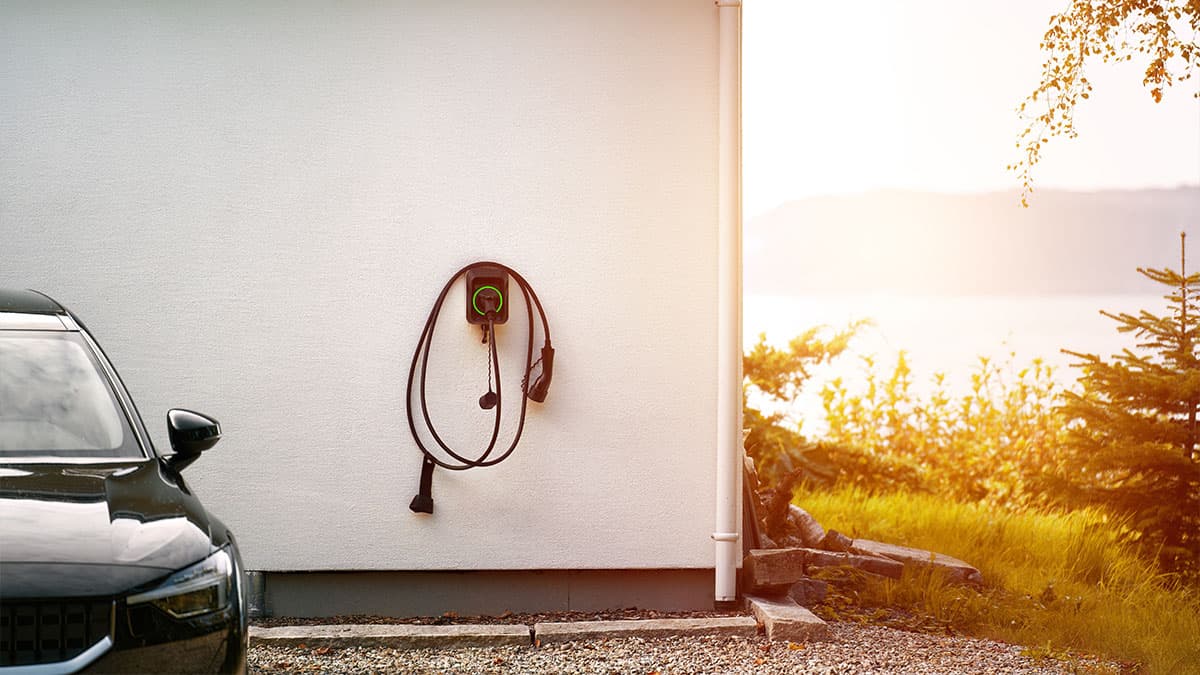
Hardwiring also avoids routine dependence on a high-current receptacle. It adds an electrician’s work when you relocate or replace the unit. Review the complete installation quote before choosing based on the charger price alone.
Compare installation costs alongside the charger price
For an EVIQO charger comparison, include the electrical work in your purchase budget. A prepared receptacle changes the project scope. A new circuit for either model introduces wiring, routing, and installation work.
Ask your contractor to identify the circuit rating, cable route, receptacle or hardwired connection, and any panel work in each quote. Permit and inspection requirements also affect the project. Do not assume one connection type always costs less.
Read our plug-in versus hardwired EV charger guide for more detail on the installation choices. For local planning, review EV charger permits in Pacific Palisades.
Luxus Construction provides electrical services in Pacific Palisades and Los Angeles. We assess the electrical scope before matching equipment to your home.
Check your electrical panel before buying
A 50A or 60A circuit requirement does not establish whether your home has room for the added load. Your contractor should review existing household demand, panel condition, breaker positions, and any feeder serving the charging location.
Read whether your electrical panel supports a Level 2 EV charger in Los Angeles before purchasing. Lower installer-set charging output or approved load management sometimes changes the design options. Your contractor must confirm the equipment and permitted configuration.
A WiFi schedule alone does not provide automatic whole-home load management. Keep app convenience separate from the electrical capacity review.
Smart features and outdoor use
Both compared models offer EVIQO app support. EVIQO specifies a 2.4 GHz WiFi connection for smart functions. The EVIQO app overview covers charging schedules, charging history, reminders, and cost tracking based on the electricity rates you enter.
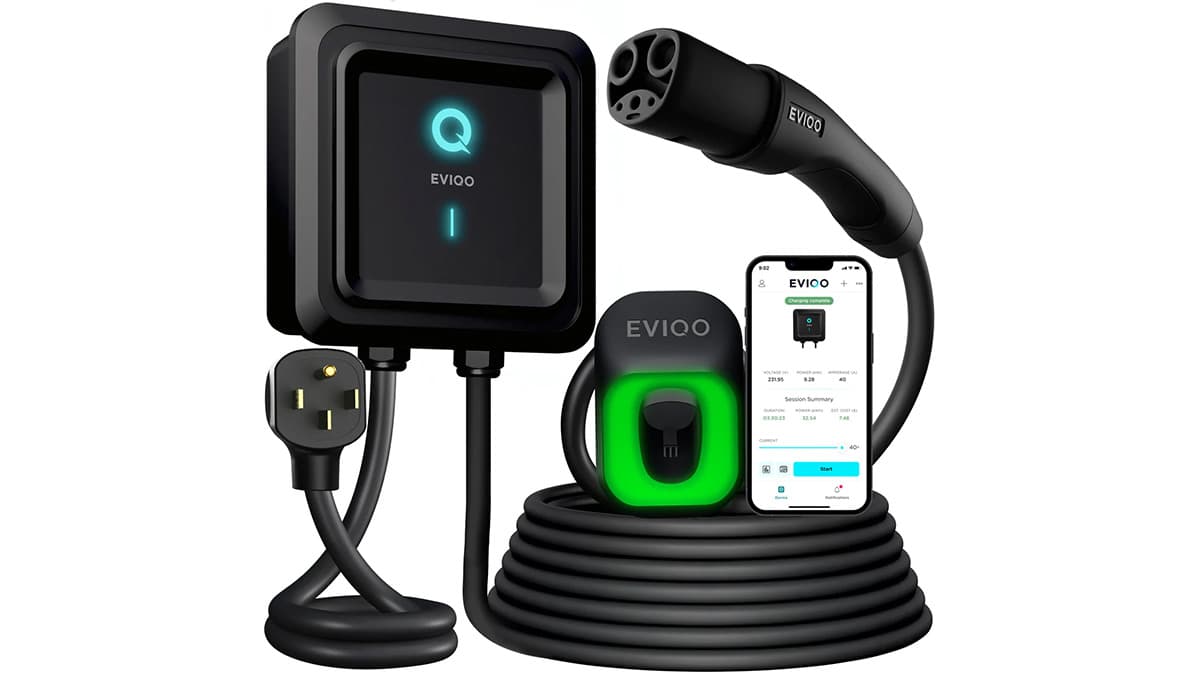
Scheduling helps you charge during lower-priced hours if your utility plan offers them. Higher amperage alone does not guarantee a lower electricity bill. Compare your rate plan and the energy you need to replace.
EVIQO lists IP66 and NEMA 4 enclosures for indoor and outdoor use on both models. Check cable reach at your actual parking position. Keep the connector stored and choose a location without stretching the cable across a walkway.
The U.S. Department of Energy home charging guide explains the need for outdoor-rated equipment and installation under applicable electrical requirements. An enclosure rating does not replace correct mounting, wiring, or weather protection for the electrical connection.
Match the connector and model before ordering
The product links in this guide lead to the J1772 versions. Check your vehicle’s AC charging inlet. EVIQO also sells NACS versions, and some vehicle and charger combinations require a compatible adapter. Confirm vehicle-manufacturer approval for any adapter.
Check the product generation and installation instructions as well. Some EVIQO listings use a 48A label for equipment whose higher output requires hardwiring. A NEMA 14-50 plug on a standard 50A circuit supports up to 40A of continuous charging. Do not assume every 40A unit converts to a 48A model.
Before checkout, confirm the connector, installation type, circuit rating, and warranty for the exact version you select. Use the linked product pages for current prices and available options.
Frequently asked questions
What is the main difference between the EVIQO 40A and 48A charger?
Is the 40A EVIQO charger enough for daily charging?
Who should choose the 48A EVIQO charger?
Do both EVIQO chargers include smart features?
Does a 48A charger always charge a vehicle faster?
Does a plug-in charger supply 48A from a 50A circuit?
Compare EVIQO models and see pricing
Choose the EVIQO 40A plug-in charger for plug-in flexibility when its output meets your needs. Choose the EVIQO 48A hardwired charger when your vehicle and electrical system support the additional power and you value shorter sessions.
Need help with your Pacific Palisades or Los Angeles installation? Request an electrical evaluation from Luxus Construction, a licensed C10 electrical contractor, before committing to a circuit or charging output.